




The Minority in Parliament has intensified pressure on the government over the worsening power situation, raising concerns not only about persistent outages but also about the management of a controversial fuel levy introduced to stabilise the energy sector.
At the centre of the debate is what the Minority describes as a troubling lack of transparency, mounting sector debts, and an attempt by government to shift blame for the ongoing crisis.
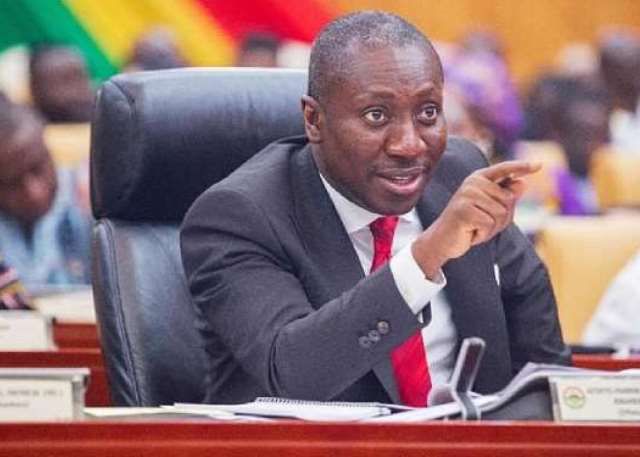
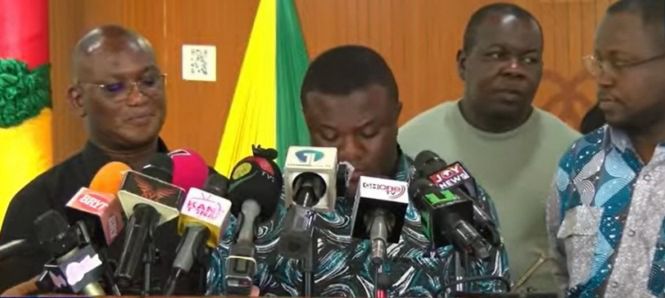
Addressing a press conference in Parliament on April 28, Deputy Ranking Member on the Energy Committee, Collins Adomako-Mensah, questioned the accountability surrounding the GH¢1 per litre fuel levy—popularly referred to as the “Dumsor Levy.”
According to him, the levy was introduced as a dedicated intervention to address the long-standing energy challenges, and citizens accepted the additional burden despite prevailing economic hardship, trusting that the funds would be used strictly for power sector recovery.
However, the Minority argues that since its introduction, there has been no public disclosure on how much has been collected, how the funds have been utilised, or whether any independent audit has been conducted.
The group is demanding answers from both the Ministry of Energy and the Ministry of Finance, insisting that basic financial accountability has been absent.
They are calling for full disclosure of all collections and disbursements tied to the levy, warning that continued silence risks eroding public trust.
Beyond the levy, the Minority is also disputing government claims that debts in the energy sector have been cleared. While official statements have suggested financial stability, the Minority maintains that available data tells a different story.
According to their figures, Ghana still owes over $500 million to Independent Power Producers (IPPs) and more than $200 million to fuel suppliers—liabilities they say contradict government assurances of progress.
The debate comes against the backdrop of renewed nationwide power outages, widely referred to as “dumsor.” The government has partly attributed recent disruptions to a fire incident at the Akosombo substation on April 23, which significantly reduced generation capacity by between 720 and 1,000 megawatts.
The incident forced a halt in electricity exports and triggered emergency restoration measures, with engineers working to bring affected units back online.
But the Minority rejects this explanation, insisting the crisis predates the incident. According to Adomako-Mensah, Ghanaians have been experiencing persistent and unannounced outages since as far back as January 2025, long before the Akosombo disruption.
He described the substation fire as merely “the latest and most dramatic symptom” of a deeper, long-standing deterioration in the power sector.
The group outlined a pattern of instability, pointing to multiple emergency and maintenance outages announced by the Electricity Company of Ghana (ECG) earlier in April, as well as public apologies issued by its leadership over erratic supply and damage to electrical appliances.
According to the Minority, these disruptions had already placed severe strain on households, businesses, and essential services, with some communities reportedly enduring days without power.
They argue that attributing the crisis solely to the Akosombo incident amounts to a misrepresentation of the facts and an attempt to deflect from systemic failures.
Instead, they are demanding a comprehensive, independently verified report on the financial and operational state of the energy sector when Parliament resumes.
As part of their next steps, the Minority has announced plans to file a Right to Information (RTI) request to obtain detailed records on the levy and broader sector finances.
They insist that accountability is not optional, warning that if the levy has been misapplied or poorly managed, those responsible must be held to account.