In 2025, Africa’s foreign exchange market was shaped by selective recoveries rather than broad-based strength, with Ghana’s cedi emerging as the continent’s top performer against the US dollar.
The Ghana cedi’s dramatic rebound led the way, followed closely by Zambia’s kwacha and the Congolese franc.
Across the continent, FX movements reflected a mix of policy interventions, export-driven inflows, and peg-driven stability, showing that strong gains were achievable even in a volatile environment.
Most other currencies experienced moderate appreciation or stabilization, highlighting the uneven nature of the market.
Commodity-rich economies and disciplined macroeconomic policies were central to the strongest trends, while global dollar dynamics continued to influence outcomes.
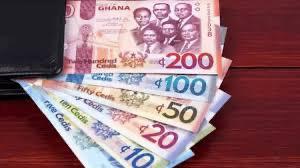
The Ghanaian cedi was Africa’s best-performing currency in 2025, appreciating by 28.6% against the US dollar to close the year at GHS10.50/$, up from GHS14.70/$ in December 2024.
The currency recorded its strongest appreciation in May (-27.30%), followed by October (-12.80%), reflecting periods of heavy FX inflows, improved confidence around policy execution, and supportive commodity dynamics.
By contrast, the cedi’s weakest months were August (11.43%) and September (6.84%), when depreciation pressures resurfaced amid seasonal FX demand and market corrections. The cedi’s rebound was driven by tight monetary policy, sustained FX interventions, and a $3 billion IMF programme that restored investor confidence. Strong gold export receipts and easing inflation further supported FX stability.
Overall, 2025 marked a rare turnaround year for the cedi, positioning it as one of the fastest-appreciating currencies globally.
The Zambian kwacha ranked among Africa’s strongest currencies in 2025, appreciating by 20.5% against the US dollar. Despite a volatile mid-year marked by FX pressures, the currency benefited from IMF-backed reforms, improved debt restructuring outcomes, and tighter monetary conditions.
The currency recorded its strongest monthly gains in June (-9.50%) and October (-7.29%), reflecting moments of improved FX liquidity and reform-driven confidence.
However, the kwacha weakened most sharply in November (3.80%) and August (3.52%), highlighting persistent vulnerability to FX shortages and external balance constraints.
The kwacha’s performance reflected recovery momentum rather than sustained FX depth.
The Congolese franc posted a 20.1% appreciation in 2025, supported by strong mineral export inflows, particularly copper and cobalt.
The Congolese franc displayed relative calm early in the year before experiencing a decisive late-year adjustment. Its strongest appreciation occurred in October (-16.32%) and September (-5.47%), pointing to a significant FX correction likely linked to fiscal and liquidity realignments.
In contrast, the weakest months were March (1.47%) and February (0.26%), periods characterised by mild depreciation pressures despite steady mineral inflows.
Overall, the CDF’s annual gain was driven by commodity-linked FX inflows, though underlying fiscal and liquidity risks remain elevated.
Used by: Cameroon, Central African Republic, Chad, Republic of the Congo, Equatorial Guinea, Gabon
The Central African CFA franc appreciated by 12.8% in 2025, largely reflecting the euro’s strength against the US dollar, given the currency’s fixed peg.
Across all six countries, the CFA franc followed an identical monthly trajectory shaped by its euro peg. The strongest appreciation was recorded in April (-4.81%) and March (-4.20%), coinciding with periods of euro strength against the US dollar.
The weakest months were October (2.19%) and May (1.80%), when the currency depreciated modestly as the euro softened.
While the stronger currency helped moderate imported inflation, gains were externally driven, offering stability rather than signaling domestic macroeconomic improvement.
The rand appreciated by 12.1% in 2025, driven by improved global risk sentiment, firm commodity prices, and episodic capital inflows. However, performance was highly volatile, with frequent reversals tied to global market dynamics rather than domestic FX policy.
The rand’s 2025 performance reflected its role as Africa’s most risk-sensitive currency. The strongest appreciation was recorded in May (-3.27%) and December (-3.19%), periods aligned with improved global risk sentiment and commodity price support.
Conversely, the rand depreciated most sharply in July (2.62%) and April (1.65%), underscoring its exposure to capital flow reversals and shifts in investor positioning.