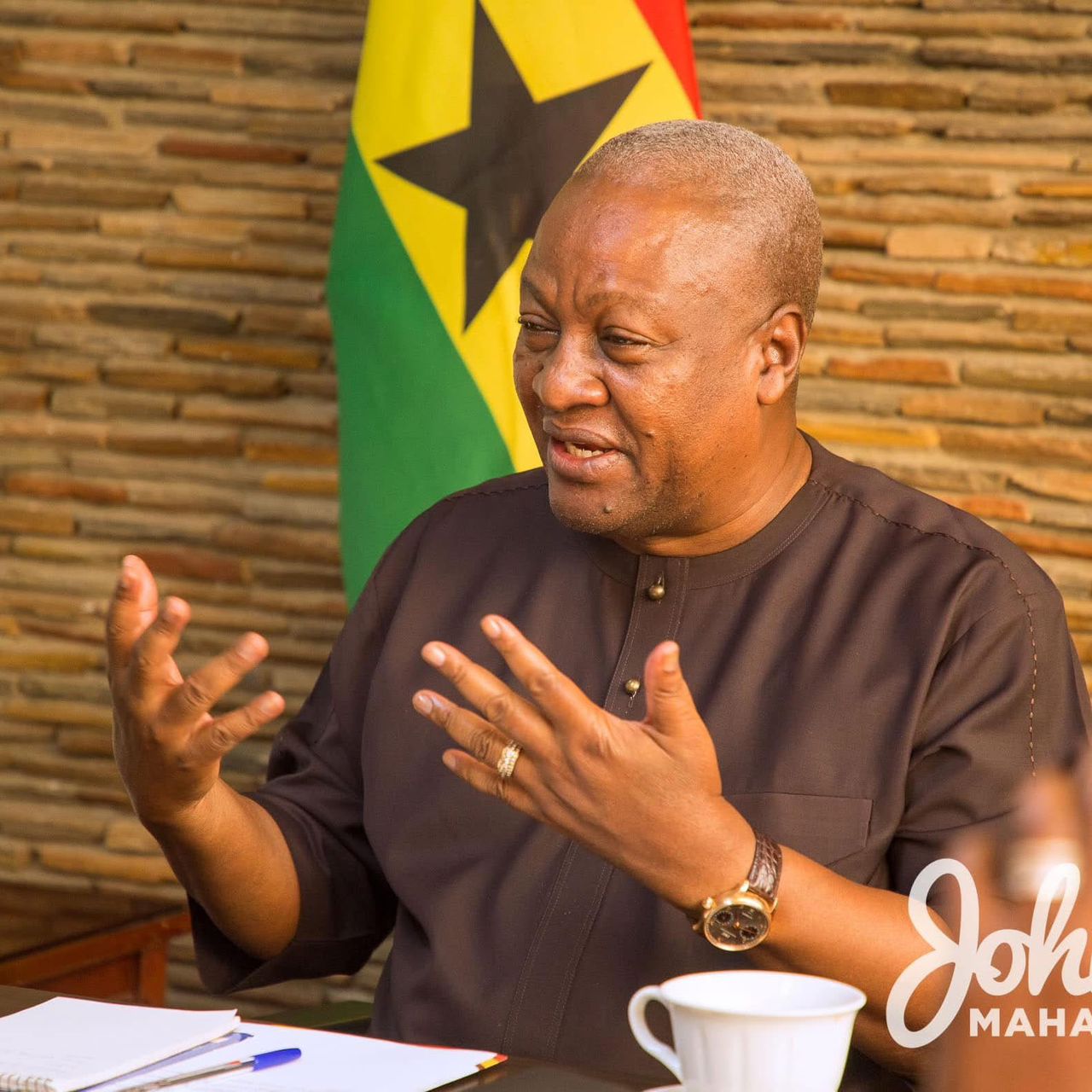





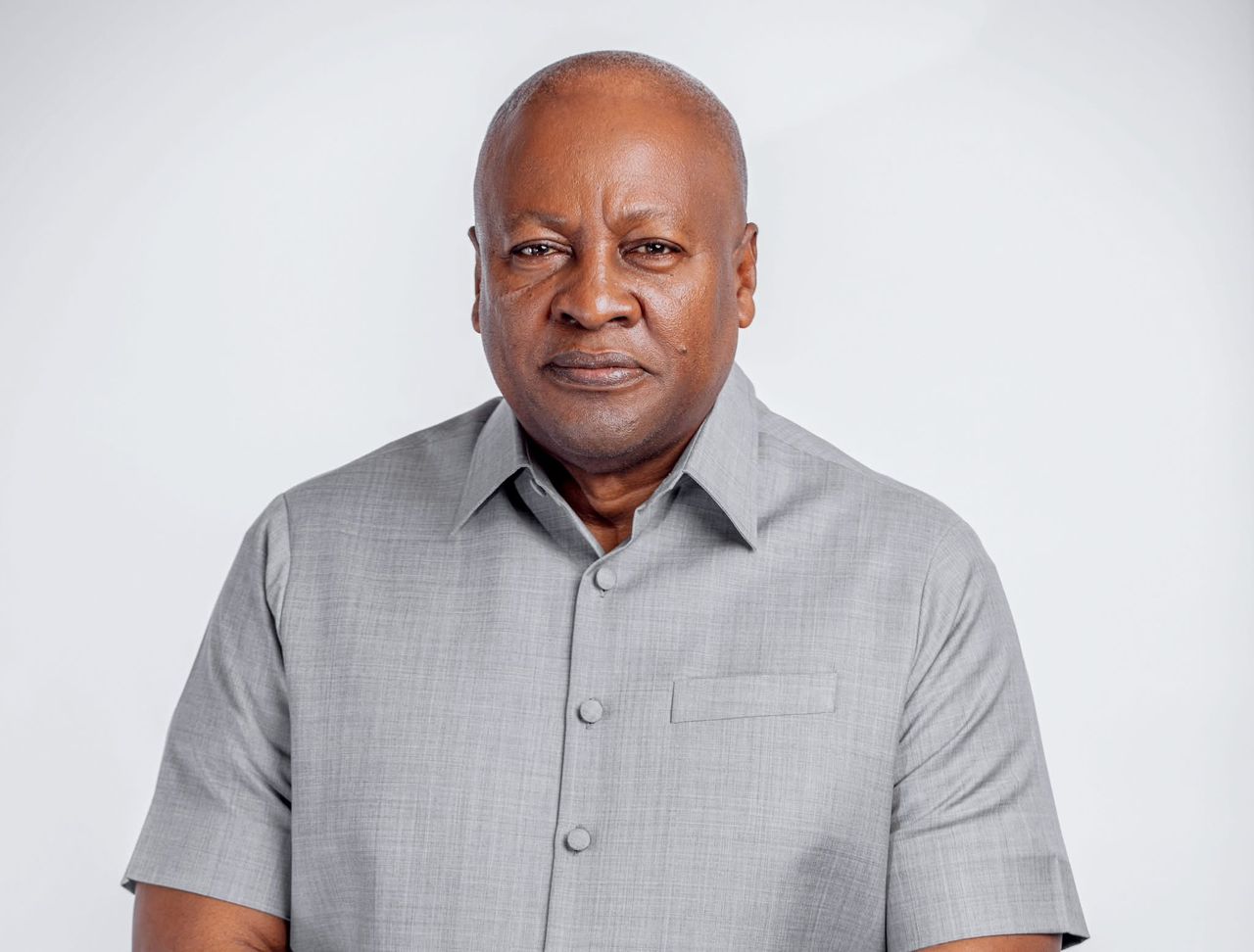
Accra, January 2026 — The Centre for Democratic Movement (CDM) on Friday released a one-year assessment of President John Dramani Mahama’s administration, concluding that governance failures have left Ghanaians worse off on a range of fronts despite a few modest gains.
The report, timed to mark the year since Mahama assumed office on 7 January 2025, singles out illegal mining (galamsey), public-sector dismissals, the high cost of living, and failures in the education sector as the administration’s most serious shortcomings. CDM said these issues reflect a widening gap between promises and results.
On illegal mining, CDM described the situation as a “national emergency ignored,” saying contamination of major water bodies and evidence of heavy metals in farm produce have increased over the past year. The group called the government’s response indecisive and inadequate to protect water, land and food safety.
CDM also condemned what it called the mass dismissal of public sector workers, calling the actions arbitrary and economically harmful. The assessment said the dismissals have exacerbated unemployment and eroded confidence in public employment without adequate social protections.
Despite relative exchange-rate stability — the cedi trading around GH¢10.60 to the dollar — the CDM said the cost of living remains “unacceptably high,” pointing to rising utility tariffs, volatile food prices and growing transportation costs that squeeze household budgets.
Education, the report argues, has suffered systemic failures. CDM criticised the Computerized School Selection and Placement System (CSSPS) for leaving many students wrongly placed or stranded, attributed a sharp decline in WASSCE performance to overcrowding and resource shortfalls, and warned that rising university fees threaten access to tertiary education.
On governance and the rule of law, CDM condemned the removal of the Chief Justice as an “attack on the judiciary” and warned the action risks undermining judicial independence and the separation of powers. The group also highlighted concerns about selective prosecutions, frequent nolle prosequi decisions in high-profile cases, and perceived impunity that it says is eroding public trust.
Security and protection of life featured prominently in the assessment. Citing ongoing violence in Bawku and a broader rise in violent crime, CDM said the State is failing in its constitutional duty to protect life and property, pointing to weaknesses in strategic coordination, intelligence and resource prioritisation within the national security architecture.
The CDM acknowledged limited positives, including exchange-rate stability, efforts at policy communication and renewed emphasis on long-term infrastructure, but said these measures have not offset the broader governance deficits.
The organisation concluded by urging President Mahama to “reset his governance approach,” recommit to institutional independence, take decisive action against galamsey, protect livelihoods and make ordinary Ghanaians’ welfare central to policy. The report warned that history would judge the administration by outcomes, not intentions.
Government spokespeople were not listed in the CDM release; efforts to secure an immediate response from the presidency had not been reported at the time of publication.
Read full statement:
ON ONE (1) YEAR ASSESSMENT OF THE PRESIDENCY OF H.E. JOHN DRAMANI MAHAMA; CENTRE FOR DEMOCRATIC MOVEMENT (CDM)
Date: January 2026
The Centre for Democratic Movement (CDM), as part of our unwavering commitment to democratic accountability, good governance, and responsible citizenship, presents this one-year assessment of the administration of His Excellency John Dramani Mahama, following his assumption of office on 7th January 2025.
This assessment is grounded in observable governance outcomes, policy decisions, and their direct impact on the everyday Ghanaian, rather than partisan sentiment. Governance must be measured not by rhetoric, but by results; particularly results that affect livelihoods, institutions, and the future of our democracy.
- ILLEGAL MINING (GALAMSEY): A NATIONAL EMERGENCY IGNORED
One year into this administration, illegal mining remains not only unresolved but visibly worsened. CDM is deeply alarmed by the increased contamination of major water bodies, including rivers that serve as primary sources of drinking water for millions of Ghanaians.
Even more disturbing is the growing evidence of contamination of farm produce, posing severe public health risks and threatening food security. Farmers and consumers alike now face the hidden danger of heavy metals in their food supply.
The lack of decisive, transparent, and sustained government action against galamsey represents a grave leadership failure. A government that cannot protect its water, land, and food systems cannot claim to be safeguarding the future of its people.
- MASS DISMISSAL OF PUBLIC SECTOR WORKERS: A HUMAN AND ECONOMIC CRISIS
CDM condemns in the strongest possible terms the mass dismissal of public sector workers and other employees under this administration. These actions have deepened unemployment, disrupted families, and eroded confidence in job security within the public service.
While efficiency and reform are legitimate governance goals, arbitrary dismissals without due process or adequate social protection amount to economic cruelty. Governance must be humane. Workers are not expendable statistics; they are citizens whose livelihoods sustain households and communities.
- COST OF LIVING: THE EVERYDAY STRUGGLE OF THE ORDINARY GHANAIAN
Despite relative stability of the cedi at approximately GH¢10.60 to the US dollar, the cost of living remains unacceptably high, exposing a painful disconnect between macroeconomic indicators and lived reality.
• Utility tariffs continue to rise, placing unbearable pressure on households.
• Food prices remain volatile and largely unaffordable.
• Transportation costs persistently erode disposable incomes.
Economic management cannot be declared successful when ordinary Ghanaians are forced to choose between electricity, education, healthcare, and food.
- EDUCATION SECTOR: SYSTEMIC FAILURES AND LOST POTENTIAL
a. Free SHS and Placement System Crisis
CDM expresses deep concern about the poorly managed Computerized School Selection and Placement System (CSSPS), which left thousands of qualified students stranded, confused, or wrongly placed. This failure undermines equity and merit; core principles upon which Free SHS was justified.
b. Declining Academic Outcomes
The mass poor performance in the most recent WASSCE is not an accident; it is a consequence of systemic neglect. Overcrowded classrooms, inadequate learning materials, teacher fatigue, and policy inconsistency have converged to weaken educational outcomes.
c. Rising University Fees
At the tertiary level, sharp increases in university fees have made higher education increasingly inaccessible to students from low-income households. This trend contradicts the promise of social mobility and risks entrenching inequality.
Education is not an expense; it is an investment. The current trajectory is deeply troubling.
- ATTACK ON THE JUDICIARY: THE SACKING OF THE CHIEF JUSTICE
CDM unequivocally condemns the removal of the Chief Justice, which we regard as a direct assault on judicial independence and a dangerous precedent for Ghana’s constitutional democracy.
The Judiciary is a co-equal arm of government, not a subordinate institution. Any action that undermines its independence threatens the doctrine of separation of powers and weakens public confidence in justice delivery.
No democracy thrives where the judiciary is perceived as vulnerable to executive interference.
- GOVERNANCE, RULE OF LAW, AND PUBLIC CONFIDENCE
The frequent resort to nolle prosequi, selective discontinuation of high-profile cases, and perceived tolerance for impunity have contributed to erosion of public trust. Ghanaians expect fairness, not favoritism; justice, not convenience.
Democracy cannot survive on selective accountability.
6A. INTERNAL SECURITY AND PROTECTION OF LIFE
- State Obligation to Protect Life and Property
Article 13(1) of the 1992 Constitution guarantees the right to life, while Article 18(1) protects the right to property. Taken together, these provisions impose a positive and non-derogable obligation on the State to take reasonable and effective measures to safeguard lives and property within its jurisdiction.
Over the past year, persistent security challenges; including the protracted and recurrent conflict in Bawku; have heightened public concern regarding the State’s capacity to fully discharge this constitutional duty. The Bawku situation, marked by periodic violence, loss of life, displacement of civilians, and destruction of property, underscores the limitations of existing security interventions and conflict-resolution mechanisms.
Beyond Bawku, the broader rise in violent crime and general insecurity has further weakened public confidence in law enforcement institutions. Where citizens are unable to feel safe in their homes, workplaces, and communities, the social contract between the State and the governed is materially undermined.
Under both domestic constitutional law and Ghana’s international obligations; including Article 4 of the African Charter on Human and Peoples’ Rights, which guarantees the right to life; the State is required not merely to react to violence, but to prevent foreseeable harm through timely, coordinated, and effective security measures. The continued insecurity in Bawku therefore represents not only a humanitarian concern, but a constitutional and legal challenge demanding urgent and sustained state action.
- National Security as a Constitutional Imperative
Article 83 of the Constitution establishes the National Security Council with responsibility for ensuring coordinated national security policy and effective responses to threats to peace and stability.
Persistent insecurity over the past year raises fundamental questions regarding:
• Strategic coordination,
• Intelligence effectiveness, and
• Resource prioritization within the national security architecture.
Internationally, Ghana is bound under Article 2 of the African Charter on Human and Peoples’ Rights to protect all citizens without discrimination. Security failures disproportionately affect vulnerable and economically disadvantaged populations, thereby compounding existing socio-economic inequalities and deepening public disaffection.
- COMMENDABLE EFFORTS
In the spirit of fairness, CDM acknowledges the following:
• Relative exchange rate stability, which has provided some predictability in planning.
• Attempts at policy communication and national dialogue, though execution remains weak.
• Renewed focus on long-term infrastructure rhetoric, even if implementation has lagged.
These efforts, however, remain insufficient to offset the widespread governance deficits observed over the past year.
CONCLUSION: A YEAR OF MISSED OPPORTUNITIES
One year into the Mahama administration, CDM concludes that the gap between promise and performance remains wide. The lived experiences of Ghanaians; rising costs, environmental degradation, job insecurity, weakened institutions, and declining education outcomes; paint a troubling picture.
Leadership is not about survival in office; it is about delivering dignity, opportunity, and justice to the people.
CDM calls on the President to reset his governance approach, recommit to institutional independence, protect livelihoods, decisively confront galamsey, and place the welfare of the ordinary Ghanaian at the center of policy.
History will not judge intentions.
It will judge outcomes.